This is the story of the £55 million regeneration of the Preston Road Estate, as reflected through the events and achievements over 12 years.
1998
A consultation phase began and was an important start to the process, this began before any funding had been confirmed.
A special New Deal edition of Hull City Council’s Housing Department Newsletter told tenants: “The Government is now asking for your opinions on what needs to be done to breathe new life into Preston Road …. The bid will have to show which area has been chosen, what its’ problems are and how all interested groups, especially local residents, have been involved in developing a plan of action.”
September: The national launch of New Deal for Communities and Hull was one of 17 urban areas of
England invited to bid for £800 million. The Hull Daily Mail wrote: “In Hull, the city council has
already earmarked Preston Road as the estate most desperately in need to investment or, indeed, a
completely new start.”
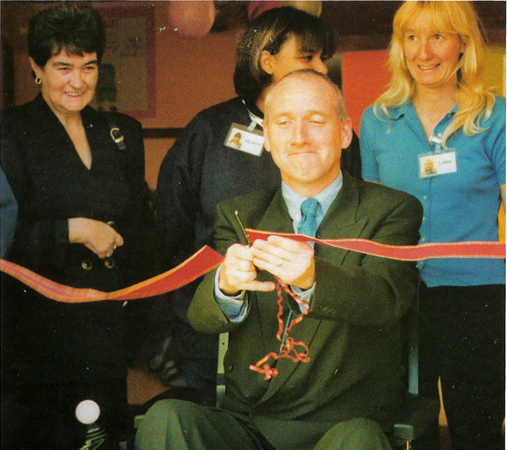
One of the first memories was former Chairman Ray Birch opening the after-school kids’ club, an NDC early-win project, watched by Janet Genter, a keen campaigner for childcare in the area, of which the first childcare provision was named after her, she sadly lost her battle with cancer, before seeing the success of her campaigns.
1999
The Government gave funding for early projects to help with planning work.
The community consultation process continued in February public meetings, Citizens’ Juries, the Community Carnival in August and elections for Partnership Board in September.
January: Richard Davies is appointed as Regeneration Manager and Julie Murrey started as administrator. By March, they were joined by Janet Harris, a consultant who began researching the baseline statistics about the area.
March: Isaac Newton School Council pupils met Hilary Armstrong, the Housing Minister, on her visit to the area. Hilary Armstrong said: “We believe the key element in delivering lasting change to some of our poorest neighbourhood’s is actively involving the community itself. The best solutions are achieved through partnership and residents must be given a say in the regeneration of their communities.”
The first PRNDC logo, which was created from a design by Natasha Newton, a pupil at Southcoates Primary
School.
August: Tidy-Up Scheme to clear and restore gardens on the estate: was launched with support from Hull City Council and Probe. It was funded along with other early-win projects such as an after-school club.
The closure of Flinton Primary School provided an ideal new home for the Preston Road NDC team, which had been temporarily housed in Probe’s Marfleet lane offices.
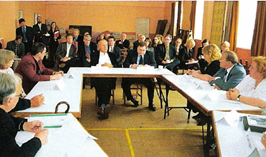
September: Elections were held for 1 3 resident places on the Board of Preston Road New Deal for Communities. The board’s role was to get the right programmes into the community and give people the chance to improve them.
The Yorkshire Post wrote of the visit: “Levels of enthusiasm were high within the community centre itself, particularly amongst three women, Dawn Genter, Janet Genter and Marina Sandell who had set up their own after-school club for five to 11 year olds.” John Prescott also brought Keith Hellawell, the drugs czar, to view work on a drugs project. Lord Richard Rogers, the head of the Government’s Urban Task Force, came to talk to the Citizens’ Jury at the Community Centre about the prospects for the Drain. He said: “The critical thing is to listen to what the people want and work with them in formulating ideas. I believe the Drain and the nearby green area is a valuable amenity and should have facilities such as play areas for children and benches for older people to sit down.
December: Winner – an early win, literally – Women’s Centre project was launched, focussing on issues of
domestic violence, safe space, training, childcare and access to employment.
2000
The start of the decade was marked by the submission of the 62-page Delivery Plan. “As chairman of the Preston Road Residents Association, this Delivery Plan is with renewed hope the best way forward for all residents on the estate hope and pray the estate can look forward to a much brighter and wealthier future.” Ray Birch, Chairman, 21 February 2000.
The invitation to form an NDC Partnership had resulted in a small group of people forming a residents association. Public meetings were then called to inform the wider community and increase involvement.
People attended those first public meetings and two groups of people came forward to form a tidy-up scheme and an after-school playgroup.
April: Hull Preston Road is announced as one of seven areas in England to share in £300 million worth of funding. Hull Daily Mail said: “The warm winds of change are blowing in our direction. Today the Government confirmed that £55 million will be provided for the regeneration of Preston Road. Not just “hot air”, not “I’ll believe it when I see it”, but £55 million of real money … secured by residents who have shown a real will to take control of their destiny. With today’s announcement they are not just one step closer to achieving their dream of a better life, they’re flying.”
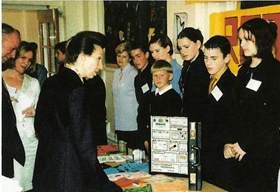
July: The Princess Royal visited to launch the work of the Hull Youth Inclusion Project. Resident Youth Director Kevin Grantham said: “lt was a pleasure to have someone so important to come down and give us a pat on the back. She was very positive and encouraging about the work here.” The Princess also met members of the estate’s Women’s Centre, Youth Jury, Fishing Club and Cascade, a peer-led drugs education scheme.
September: the additional Policing Team consisting of one sergeant and three constables was formed to address
the main concern about residents feeling safer in their homes. They were to subsequently link and work with a team of community safety workers and housing staff on issues such as anti-social behaviour.
October: Don Smallwood became chairman of the PRNDC Board.
The Year Two Delivery Plan Update reported youth crime down, 350 women accessing the Winner Project, two pilot breakfast clubs proving popular and 25 people saving through a new Credit Union.
2001
January: 15 months after being set up as an early-win project under New Deal, the Preston Road Women’s
Centre – Winner – received a £300,000 boost from PRNDC to improve on the services already on offer.
March: Regeneration Minister Hilary Armstrong returned to Preston Road two years after her first visit, to launch the Community Safety Unit, a team recruited to tackle environmental problems, vandalism and graffiti. She said: “This is a community-led project and many of the initiatives that are up and running such as the After-School Club, Breakfast Club and the Community Safety Unit that I launched – have all been created with an input from local people. 
” The Minister also unveiled a plaque at the After-School Club in memory of Janet Genter who helped set it up. She also viewed environmental improvements to the Waterway and visited the site of the proposed Preston Road Village Centre.
By this time, the list of projects had topped to 16, according to the first issue of Preston Road News, with a further 16 to come. Schools were becoming very involved, with breakfast clubs in Foredyke and St Richard’s, ‘Going for Gold’ which gave support to parents, and Literacy and Learning – extending the work of Sure Start’s staff.
June: The Preston Road Motorbike Club was kick started, in conjunction with the Police to discourage youngsters from joyriding. It was based at the Two Wheel Centre in Chapman Street, Hull.
The Solution Centre, a one-stop shop, opened it’s doors. The temporary building housed advice services and an information shop, bringing services such as Citizens Advice much closer to the community. The official opening was by two of the longest serving residents on the estate, Vera Snell and her elder sister Marion Batty, along with John Prescott. Speaking at the time, Mrs Batty said “It’s magnificent, I hope people will take advantage of what is on offer to them.”
Childcare had been cited as a major need on the estate and a new community nursery was developed in partnership with Hull College. The facility was opened in June 2001 and named after campaigner Janet Genter, who had died in 2000 from cancer. The Nursery offered nine places a day to children aged 12 weeks to two years, and 16 places for 2-5 year olds. It was to be part of a network of facilities around the estate.
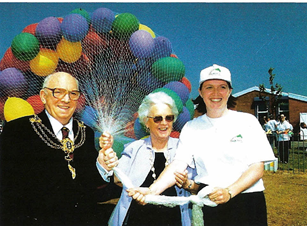
Planting a tree to mark the official opening of the Nursery at Flinton Grove, Lord Mayor Fred Beedle said “I am truly grateful to have been invited to see this magnificent achievement. The community workers have thought of everything. It is really nice to see something like this on the estate and I have nothing but admiration for them.”
East Hull Community Transport was created in August with funding from the European Union. The aim was to create a service which “reaches the parts that other buses don’t reach”. Whilst backed by PRNDC, the Community Transport service covered all of East Hull with its dial-a-ride and group travel functions.
October: The empty nursery at Maybury Primary School was converted by PRNDC into a community learning centre to provide training in IT, office skills and hairdressing. Courses started for the Autumn term, in conjunction with Hull College. Councillor Gordon Wilson, Hull’s Cabinet Member for Education, cut the ribbon alongside PRNDC Board members Jean Toker and Jeni Arnett.
Preston Road Works! – the PRNDC project for helping residents into jobs – launches by offering residents the chance to train to take jobs at nearby Hull Docks.

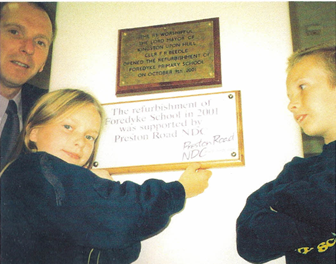
Foredyke School celebrated the completion of £200,000 of refurbishment which saw the refitting of classrooms, an IT suite, a new reception area and structural improvements. Lord Mayor Fred Beedle officially announced the completion of the work and said “18 moths ago, the school went into special measures. It has now been brought into the 21st century and will now go from strength to strength.”
An 11-strong Taskforce was recruited and took to the streets in November. Their role was to be a bridge-builder between the community and the work of PRNDC. They would also promote the help available through campaigns such as National Warm Homes Week, and launch a community membership card scheme.
Health issues were also gathering momentum. A unique project called ‘Support Not Pills’ was started to help residents come off anti-depressants and find the root cause of their problem.
2002
The year of decisions over plans for a new village centre for Preston Road, for environmental improvements, a BMX park and play areas, as well as employment and training schemes.
January: saw the unveiling of a £90,000 play area for local children at the Regeneration Centre, the first play facility on the estate in years.
Deputy Prime Minister John Prescott returned for a ceremony to announce plans for a multi-million pound ‘Village Centre’ on land at the centre of the estate. The facilities could include a healthy living centre, college, offices, shops and a police station.
February: Winner – the two year old women’s project moved into larger accommodation on Preston Road. The Centre has a team of 30 staff and volunteers.
March: The European Social Fund awarded PRNDC £546,000 to help fund nearly 100 job opportunities in IT, Construction, Catering, Retail and Administration.
Pupils from Foredyke Primary School were the guests of Harrods’ owner Mohammed Al-Fayed in London after he agreed to host a visit by Hull’s Children’s University, the out-of-school literacy scheme.
April: saw the start of a £7 million programme of environmental improvements to 1000 homes, providing facelifts and fences to gardens.
Foredyke Primary School became the first in the country to screen its pupils for dyslexia, in a joint venture with PRNDC and the Dyslexia Institute. Some 38 pupils were identified as having the condition, which enabled the school to take steps to help the youngsters.
BBC regional television presenter Helen Philpot opened the UK Online computer suite at the Regeneration Centre. Later in the year, it was named the best in Yorkshire and the Humber by the Department for Education and Skills. It was judged on marketing, collaboration with partners such as Hull College, accessibility plans for people with disabilities, and teaching. It was used by people of all ages, including the ‘golden girls’, older residents who came to learn together.
Ivan Lewis, the then Minister for Adult Learning, said “UK Online centre’s like Preston Road help people take their first steps into the internet world and an opportunity to learn new skills.”
The Home Secretary David Blunkett visited the new BMX and skate park – the £500,000 Trax project built next door to Foredyke Primary School, and he also launched the Youth Bank, a fund to give out grants for good ideas for young people.
Community spirited butcher Fred Elliot from Coronation Street took a break from the shop to open a new shop, Action 243’s community development service on Southcoates Lane. This project was to provide help and training and develop more community groups on the estate.
July: There was a £70,000 expansion of the Janet Genter Community Nursery to increase capacity. A creche was also opened at the Women’s Centre.
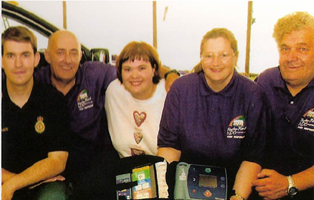
Preston Road became the first council estate in the country to have the services of a community paramedic assigned to it. John Burnham, who worked for the Ambulance Service, took up the role to help tackle the level of heart disease in the area and recruit volunteers to form a ‘first responders’ group.
Residents with financial concerns were thrown a lifeline with the official launch of Hull East of the River Credit Union Ltd (HERCU). Official recognition by the Financial Services Authority granted HERCU permission to issue loans.
August: East Hull Community Transport was expanding, to launch H2H, a service for taking people to visit patients in hospital.
The proposed childcare building for the Village Centre received a financial boost in September with £80,000 from the National Lottery’s New Opportunities Fund.
October: Two Cabinet heavyweights came to visit the progress on the estate. John Prescott brought the then Chancellor Gordon Brown, who met residents and staff. He said “I’ve seen how PRNDC is encouraging people to gain new sills and the potential here for more jobs. The Government should be enabling and empowering, not directing and controlling. Preston Road is a model for the rest of the Country.”
November: In another key step for the regeneration programme, Preston Road NDC was renamed the Preston Road Neighbourhood Development Company, now a registered charity which would provide status to make it easier to bid for funding.
Another Coronation Street star visited the estate at the end of 2002 when Tina O’Brien, who played Sarah Lou, came to officially open Wire IT, the European Social Fund backed initiative to equip 1000 households with internet access. The scheme would use PC’s built by residents on the Computer Build course at the Maybury Road site. Sarah Lou had been a victim of internet chatrooms and she also launched a safe surfing scheme for youngsters.
“It’s a really good idea to provide a service like this, with the massive learning library that the internet offers. Computers are also really expensive so anything that helps like the Preston Road NDC Wire IT idea can only benefit residents.”
2003
It marked the exciting start of building the Village Centre with different partners signing up, plus the busy year saw celebrations for community spirit and learning.
January: A snowy Preston Road estate saw John Prescott return to launch building work on the proposed £20 million Village Centre with the first development to be a childcare centre. Joan Summers, a former PRNDC board member who had missed out on digging the first turf at the Solution Centre, did the deed this time. “I want to put the foundations in now. It’s very exciting now that it’s finally happening,” she said.
The Police signed up to build new premises for its neighbourhood policing team in the Preston Road area.
The first ever Preston Road Community Celebration was held at the University of Hull in April to commemorate unsung heroes. Some 14 residents were recognised, from a 77 year old who ran errands for fellow residents at Mulberry Court to someone in their 20’s nominated for running a football team.
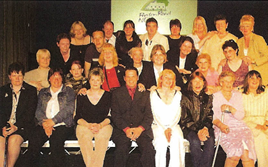
June: The Solution Centre on Preston Road closed down to make way for construction work on the Village Centre. Meanwhile, the estates first community house, Craven Lea on Endeavour Crescent re-opened it’s doors after refurbishment.
It became a popular venue for indoor bowls, training sessions, craft classes, family history session and youth activities. June also saw Preston Road resident Glenis Edwards being presented with the Yorkshire Individual Learner Award for her commitment to training in office skills.
A boost for green fingers: The go-ahead was given for a £1.2 million horticulture training centre at Portobello Street, with part-funding from the European Regional Development Fund, and appropriately on disused allotment land.
Hull City Council became the next name to commit to the Village Centre by starting work on a £1.3 million family resource centre for it’s Social Services Department. Acting Chief Executive Jan Didrichsen surveys the site in this picture.
Two residents were invited by royal appointment to the Queen’s Garden Party in the summer. Jean Toker and Rita Butler were nominated for their community work.
The residents health group, Encompass, organised a health summer fun day at Craven Park with Hull Kingston Rovers players putting people through their paces!
The installation of a 1000 strong network of computers across the estate was complete, under the Wire IT project. Recipients had a choice of payments, cash or volunteer hours.
More building work started at the Village Centre with the first new build police station in Hull for 20 years. This one on the corner of Aldborough Grove, was to become the headquarters of the Southcoates Neighbourhood Policing Team. Construction also started on the first retail unit, to be taken by The Co-operative.
October: saw the second park and play area to be created by PRNDC. The £250,000 John Hadland Park at St John’s Grove was named in memory of a PRNDC Board member who had been keen on developing activities for young people. His widow Christine was joined by the Lord Mayor of Hull Councillor Ken Branson for the ceremony, who declared “John was dedicated to this area and he’ll be looking down on us, he’ll be a chuffed lad.”
Preston Road’s local bobby PC John Legard was named Humberside Police Community Policeman of the Year for 2003. Chief Constable David Westwood said “This is a tribute to the force and to Preston Road.” John had served the area for six years.
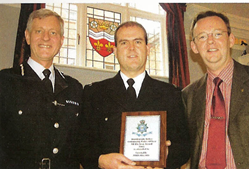
A video produced by the Preston Road Motorbike Club was premiered at the Hull Short Film Festival, at the Odeon in the city centre.

There were celebrations at Foredyke Primary School when Ofsted was taking it out of “special measures”. The then Headteacher Paul Carlise was nominated as regional headteacher of the year.
December: The true extent of debt on Preston Road was revealed through PRNDC’s Financial Exclusion Project. £1 million was being repaid by residents to doorstep lenders. This story, which first appeared in Preston Road News, was picked up by the Mail, then Yorkshire TV’s Calendar, News of the World and GMTV!
The month saw the formation of a group of 18 first responders who were trained up to ‘jump start’ a heart. This was the focal point of the Community Paramedic project, under the supervison of new face Ron Wilkinson.
December 2003 ended on an educational high with community learning awards to mark the achievement of some 50 residents on the many courses organised on the Estate. The ceremony took place at Craven Park.
2004
Rapid progress at the Village Centre, and we launched our first social enterprise. The community safety partnership work gave us confidence to stage a campaign and national conference.
March: The £1.5 million Children’s Centre, likened to a fairytale castle, became operational at the Village Centre.
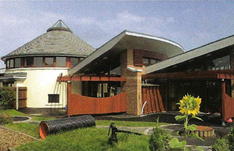
Residents were taking advantage of a new self-employment project which started to see people running hairdressers, cafe, shoe repair and roofing businesses, to name but a few.
April: It was independence day for the Preston Road Women’s Centre, which became the Winner company, the first social enterprise to be created by the NDC regeneration project.
Jean Toker, vice chair of the PRNDC Board, dug the first turf at the start of work on the £3.5 million community facility, to be known as the Freedom Centre. Mrs Toker said “This is the jewel in the crown of the Village Centre and regeneration work on Preston Road.”
Elsewhere on the six acre site, the new police station opened and Sergeant Jacquie Young joined as the new leader of the Additional Policing Team.
May: PRNDC, the council’s Park Area Committee and the Hull Youth Inclusion Programme joined forces to provide an alternative approach to outreach and youth clubs. The Youth Bus, donated by Stagecoach, underwent a £20,000 refurbishment to offer a wide range of services including health advice, workshops and information, as well as a place to ‘chill out’.
Operation Cleansweep – this 11 week summertime blitz on anti social behaviour and community safety started in June.
The activities included environmental clean ups, the introduction of a youth bus, promotion of new Connexions card – a loyalty scheme for teenagers which provides proof of age – use of a community play bus to entertain young children, education in schools by paramedics and firefighters, high visibility policing including the use of a community copshop, truancy sweeps, a crackdown on under-age drinking, and drugs raids. Two publications were also produced – a residents guide to tackling anti social behaviour and a witness support package.
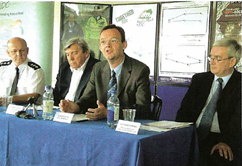
November: A national conference, Blurring the Edges, was held at the Royal Hotel in Hull, with around 100 delegates from across the country. It showed how the public sector agencies all worked together with the community.
September: The Children’s Centre won the community benefit category in the Pro Yorkshire Awards from the Royal Institution of Chartered Surveyors. The awards kept coming. A month later, Community Paramedic ‘Rocket’ Ron Wilkinson picked up the Health category in the first New Deal for Communities National Achievement Awards at Birmingham. PRNDC was commended for Partnership of the Year and was runner up in the Education, Employment, Mainstreaming, Youth and Young Person’s categories.

The Village Centre was awarded a £50,000 government grant to install photovoltaic cells in the Freedom Centre to help take advantage of renewable energy.
The Co-operative opened the first shop at the Village Centre in a £250,000 investment, creating 17 jobs.
The Woodland Trust chose the East Hull Centre for Horticulture at Nursery Grove to launch it’s ‘Forest of Flowers’ campaign for the city. It was an attempt to increase the level of forestry in the least wooded city in the country.
A seven-strong team of “community stewards” started work on the Estate managed by the Goodwin Development Trust.
November: Hull’s Director of Learning and Culture Helen McMullen signalled the start of construction on a £1.5 million adult learning facility adjoining the Freedom Centre. She was joined by Joan Sanders, then director of Neighbourhood Management, to mark the start of work.
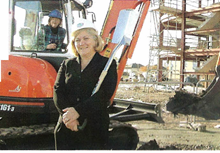
A £22,000 Heritage Lottery Fund grand financed a short film by estate teenagers about the history of their local community. More than 40 youngsters were involved in making the 30-minute production which was premiered at Hull Screen.
Teenagers from the estate began training to become young advisors. Hull was one of four pilot areas in England selected by the Goverment.
2005
It was the half-way point when our yearly spending peaked at £14 million and there was the momentous launch of two social enterprises.
January: John Prescott officially opened the new £400,000 police station for then then Marfleet and Southcoates Local Policing Team at the Village Centre. It was part of the Humberside Police-wide programme of new accommodation for neighbourhood police teams.
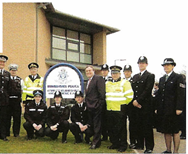
April: Probably one of the biggest days for PRNDC came with the launch of two social enterprises, which provided services borne out of the wishes of local people. Child Dynamix – which ran two out-of-school clubs and the childcare centre – and East Hull Community Transport were both PRNDC-backed initiatives.
Dawn Grantham, daughter of late childcare campaigner Janet Genter, said: “My mum would have been amazed at what’s happened since 1999 when we raised the issue of childcare at a public meeting and called for something to be done. Even with four children, she managed to fit her working hours around us but didn’t want us to struggle in the same way.”
May: One thing which sets Preston Road apart is the degree to which it employs local people. Most NDC’s have a staff of nine or ten. At Hull there are 250, around half of them local residents. It was decided to run as many initiatives as possible in-house rather than contract out. “This has enhanced the sense of community ownership,” says (managing director) Richard Davies, “provided employment, boosted the local economy, brought me close to residents and turned staff into ambassadors for the estate.”
The 1.8 million East Hull Centre for Horticulture opened its doors on Nursery Grove, off Portobello Street. Yorkshire Forward, the regional development agency – announced a £200,000 grant for construction training workshops.
June: Yet another award – The Children’s Centre scooped the community benefit category of Yorkshire Urban Renaissance Business Insider magazine.
It’s a knockout in June was one of the fifth anniversary celebration events which brought the Preston Road community together. The police team was victorious but it also involved Child Dynamix, Hartlepool NDC and local community groups.
August: Preston Road News celebrated its 50th edition of reporting on regeneration news and development for residents.
Teenagers were presented with the Best Commercial Premises award for their hanging baskets outside Preston Road Police Station by the Mayor Cllr Bryan Bradley. The teams were Flower Power One and Two comprising James Mckinney, Damian Travis, Nathan Bryant, Nathan Mba, Lewis Travis and Dane Cunningham.
The Preston Road Carnival moved to a new venue, John Hadland Park. The event attracted regional television coverage from BBC Look North for the first time.
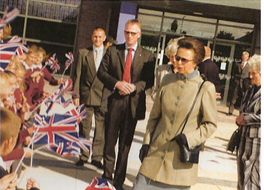
September: The Princess Royal made her second visit to the estate, greeted by the flag-waving schoolchildren, and toured the newly built Freedom Centre, meeting residents, staff and the development team. She also saw the adult education and the Child Dynamix building, and viewed plans by estate teenagers for their own youth centre.
October: Steve Furgusson of St John’s Grove was given a community champion award by Goverment Office for Yorkshire and the Humber, for setting up the men’s group, MUST, in Hull. One of 31 people to be saluted, he was presented with his award at a ceremony in Leeds.
November: The East Hull Centre for Horticulture put its plans for a healthy-eating programme to the public vote by entering the People’s Millions to mark ITV’s 50th anniversary. Pupils from Maybury Primary School joined staff and volunteers for a film shot by ITV Yorkshire but sadly the initiative was beaten by a project in Wakefield, on the Calendar programme.
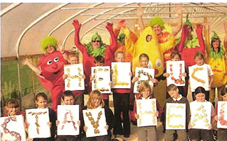
The Cop Shop Crew won the Humberside Police Lifestyle Competition. The youngsters had organised a tidy-up around the estate, and persuaded the Council’s waste management team to make secial trips to clear away abandoned furniture from gardens. The Crew – Abbie Douglas, Lisa Bryant, Ryan and Jamie Campbell won a holiday to Florida.
December: Freedom Centre opened its doors to the public with a series of festive events including an angels’ parade, a carol service led by the Bishop of Hull, and an operatic society production.
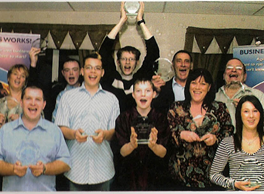
13 residents were the toast of an awards evening to mark three years of Business Development work on the estate. The project was intended to help people into work and self-employment. The event marked the transfer of employment services to Probe from PRNDC.
2006
The physical change switched to housing and we started to mainstream some of our successes.
March: Hull Cityimage, the city’s marketing agency, held its regular bondholders’ breakfast meeting at the Freedom Centre for the first time. This was a prestigious moment for Preston Road, attracting city business leaders to the estate for the networking meeting. PRNDC Youth Board Member Annemarie Edwards addressed the meeting.
April: Gateway and PRNDC staged housing consultation – branded House Talk – at the Freedom Centre.
July: One Hull, the city’s local strategic partnership, unveiled a DVD which had been youth-proofed by teenagers from the Estate who had become young advisors to the Office of the Deputy Prime Minister.
The East Hull Centre for the Horticulture launched Portobello Trading, a retail arm to sell plants to the public.

The NHS opened its walk-in minor injuries treatment facility at the Freedom Centre.
The Village Centre won Best Community Project in the Yorkshire Renaissance Awards, organised by Yorkshire Business Insider Magazine.
September: New house-building started on Ganstead Grove, in conjunction with Gateway.
It was an early Christmas present to the Estate. £4 million worth of project funding was announced – to build a youth centre, an expressive arts complex and a construction skills centre. Hull City Council Leader Carl Minn’s joined the announcement ceremony at the Freedom Centre. He said: “We’ve seen local people being responsible for the change here and that’s why I get excited about the achievements at Preston Road.”
PRNDC Chairman Don Smallwood was awarded an MBE in the Queen’s New Year Honours List, for the services to community regeneration.
2007
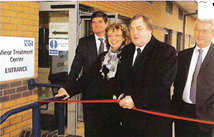
January: John Prescott was on hand to launch Hull’s latest NHS Treatment Centre at the Freedom Centre. The facility in now open 9-5 weekdays to provide treatment for burns, cuts and stings.
February: Preston Road won funding for a UEFA football scheme, one of 19 NDC areas to share £4.5 million. The then England manager and former Hull City player Steve McClaren visited Foredyke Primary School to launch the scheme which included coaching sessions for youngsters.
Former Apprentice winner Michelle Dewberry and a BBC film crew visited the Estate to film a documentary about regeneration in her home city. Michelle joined youth worker Mike King and a group of girls on a trip to the Two Wheel Centre. The programme was shown in the summer.
March: The street Champions programme was started, run by resident Rita Butler, with the aim of recruiting residents to report issues which concern them.
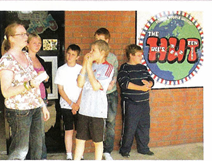
July: Preston Road’s long-awaited youth facility was opened on the site of the former library. The Hut, as it was to be named, was greeted enthusiastically. The very first issue of Preston Road Life reported Kayleigh Chadwick’s reaction: “This is what we wanted, a good place for everyone to chill out.” The youth centre boasts a quiet room, a TV area and an open-plan kitchen.
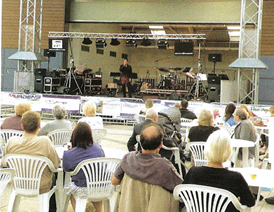
August: A week-long Freedom Festival was staged to offer more variety to the summer flagship event, focussed on the Village Centre.
November: John Prescott was joined by Elaine McMahon, Principal of Hull College, and Richard Davies of PRNDC to officially open the Construction Skills Centre at Nursery Grove.
2008
Residents witnessed further physical change to the landscape on Preston Road and plans were announced for a new academy.
January: St John’s Church in Rosmead Street was reopened as a community centre after a £660,000 refurbishment.
February: The £1 million Expressive Arts Centre next to the Freedom Centre was opened. The facility, part-financed by the European Regional Development Fund, was planned as a home for the Preston Road Amateur Dramatics Association (PRADA)
April: 108 new homes on Ellerby Grove were completed, in the first phase of a new housing on the Estate by Gateway.
September: The Expressive Arts Centre won the community benefit category in the Pro Yorkshire Awards 2008 from the Royal Institution of Chartered Surveyors.
December: 78 properties on Preston Road and Skerne, Rudston and Mappleton Groves were demolished.
2009
The final full year of PRNDC activity saw loose ends being tied up with further long-term investment.
August: The Flinton Fields Community Football Project was unveiled by John Prescott and Don Smallwood. Funding from the football Foundation helped provide changing facilities, a multi-use games area and football pitches.

October: Saw work start on an extension to the Freedom Centre. The £850,000 expansion will boost function capacity, provide a new walled garden area incorporating a water feature, and trebles the floor space in the gym.

November: 184 properties were demolished on Bilton and Mappleton Grove’s and Portobello Street to provide land for the new Archbishop Sentamu Academy. This is being built as part of Hull’s Building Schools for the Future initiative.
EMS Yorkshire, a new charitable company to tackle neighbourhood management, was formed. It’s chief executive was former PRNDC Director of Neighbourhood Management Jan Boyd. EMS staff are joined by Hull City Councillors, police and wardens on walks across Southcoates East to check out problem areas. These have been praised as best practice at a national level.
Research published in ‘The Fall and Rise of Preston Road’ this year showed concern from residents about the future. Even the most negative of interviewees acknowledged that PRNDC had brought about a great many positive improvements to the area. They did not want the estate to fall back to where it had just been prior to the PRNDC’s arrival.
December: There was a Christmas welcome to the Freedom Centre, with a festive market and other entertainments.
2010
After supporting 98 projects in the 10 years, PRNDC has left a legacy for the future development of the community.
March: Opening of the new extension at the Freedom Centre.
The Department for Communities and Local Government signed off PRNDC’s Succession Strategy, ensuring a lasting legacy and charitable status for the company’s assets.
March 31, 2010: The end of the 10-year regeneration programme and the funding stream from New Deal for Communities.
The closure of the Regeneration Centre at Flinton Grove will see the Preston Road Neighbourhood Development Company move its base to the Craven Lea Community House, Endeavour Crescent.
Preston Road Enterprises is the trading arm of PRNDC and it is intended that surpluses generated will be offered up as small grants for the community.
 Preston Road NDC